Heineken 0.0
permission, then the retirement of permission.
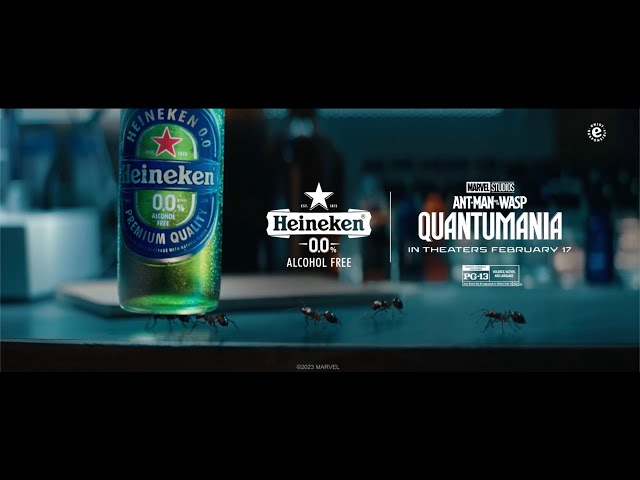
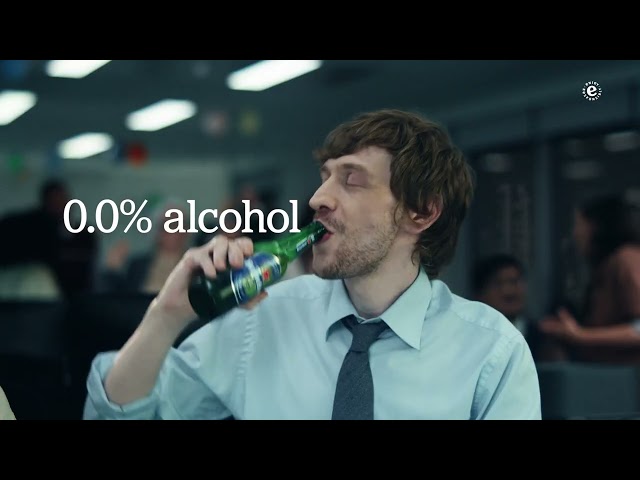
Nine executions since 2018, same beat every time: a place where beer is forbidden, other people’s suspicion, then the label turned to camera.
In 2025 it started killing the excuse it built.


A competitor analysis for a brand is a review of what each rival says and shows in its ads, what the whole category repeats, and the ground nobody claims. It ends in a decision about your own work, not a scrapbook of theirs.
Use it before a launch or a new campaign, when you know your rivals’ names but not their playbook.
We asked
Review our competitors’ ads. What are they running, and where’s the gap for us?
Straight Face is a sample brand: a 0.0% lager before its launch, with a giant 0.0 as the face on its can. Its team had already picked a line, “Good question.”, said with a straight face when someone asks “why a zero?”, and a direction: the flat face spreading until it is too big to ignore. We sent one plain message, no rivals named. The quotes, tables and films below are the reply as it came back on 13 November 2026.

the leader that will not say its own name.
The volume leader in the category bought the biggest ad night of the year and put its 0.0 in the small print at the bottom.
The zero-proof claim is unowned on the largest stage in advertising.
The brief named no rivals, so the first research pass settled who takes the buying. Its call: contested, three leaders on three measures. The figures are the chat’s, from trade press.
Leader by volume
No. 1 in Circana scans within a year of launch; 47% of category growth
Leader by dollars
20.7% off-premise share; 2.9M cases; 100,000 accounts
Leader by single-brand dollars
4.2M cases; the brand that taught the market what 0.0 means
Occasion owner
Olympic platform, 4.6% supplier share, biggest global NA campaign
Craft benchmark
The best-executed "same pint" claim in the category
First mover on the frame
"Good AF" named and attacked the apology position in January 2026
The cautionary case
The only one still selling the excuse, and the smallest presence
Attention rival
Tom Holland and Spider-Man; the most unapologetic pack in the set
permission, then the retirement of permission.
Nine executions since 2018, same beat every time: a place where beer is forbidden, other people’s suspicion, then the label turned to camera.
In 2025 it started killing the excuse it built.
craft authority, and the friction erased before it can be felt.
The arc runs from occasion sprawl (2022) to ordering (2024) to taste proof (2026).
The can is held in the open in every inspected frame. The hesitation is named and resolved inside three seconds, every time.


belonging, bought by the season.
The most distinctive craft in the category, and the hardest to copy with one spot: it bought the Premier League and a 90-second season film, not a :30.
The films abandoned the frame; the words kept it.


golden hour, and the bottle almost never drunk.
Its world is outdoors, in groups, at sunset. No bar, no dinner table, no sofa, no joke at its own expense.


What every rival shares
What the category does instead is hide the zero. Every rival borrows the full-strength pack and whispers the 0.0. The buyer is not hiding the can.
Price of entry
Everyone
Join. Our can has to pour like a beer.
Shared, and it is the tell
Heineken, Corona, Guinness, Peroni, Stella
Invert. The 0.0 becomes the face, not the footnote.
Shared
Athletic, Michelob, Corona, Heineken (F1)
Skip. Crowded, and it is the alibi we are killing.
Owned, then abandoned
Heineken until 2025, Budweiser Zero, Guinness’s product page
Break. "Good question." is the break.
Owned
Athletic
Do not fight it head on. Our brewing proof is a fact, not a platform.
Owned
Guinness
Do not borrow. One spot cannot out-belong a season.
Owned
Corona
Leave it.
Shared
Budweiser ("Kings of Zero"), Guinness ("Unsung Zeros")
Avoid. Our line ends on a question, not a gag.
Athletic erases it in three seconds. Stella makes it a punchline. Heineken makes it a gag about the boss. The brief’s enemy is the question, not the can, and no rival will sit in it, because every one of them has already decided the answer is "it’s just beer".
Every rival’s design decision is to make the absence invisible at shelf distance. Our pack is the opposite move and it is already made.
Every film in the set is intimate: a pub, a kitchen, a beach, a terrace, a garden table. The locked direction, a flat face spreading until it is too big to ignore, has no competitor anywhere near it, and it is a graphic idea rather than a production one.
Join the pour, break the whisper.
The can pours into a glass and looks like beer. The 0.0 is the loudest thing on the pack and on screen.
Never give a reason.
No designated driver, no 7am meeting, no training plan. The question lands on the beer and the beer answers with a face.
Work at a scale the category has not tried.
The face spreads across a bar, a street, a stadium until it is too big to ignore.
What it can’t show: This run read what rivals say in films, press and their own channels. Paid social ads didn’t come back from the ad libraries, so it can’t say how loudly each one spends. The market figures are from trade press, which the chat notes disagree on who leads.
Five steps, in this order. The first decides everything after it.
Name the buyer first, then the rivals at three levels: the same product, other formats for the same moment, and anything else that answers the need. Pick by size and how often people bring them up, not by how alike the product is.
Five to ten ads each, in date order: the big campaigns first, then current social, plus one older campaign where the strategy changed. Your own brand gets a library too: it is the baseline.
Who it talks to, the one reason it gives, the moments it targets, and the assets that tell you it is them: colour, pack, line, film style. Note what changed lately and the line people still quote.
Sort every ad into the few messages the category keeps repeating. Mark each one as the price of entry, shared, or owned by one rival. What fits no pile is someone’s own.
For each code, join it, refresh it or break it. Break one or two at most, so you still read as the category. Name what you must not borrow, the leader’s likely reply, and what you give up.
Put a rival’s logo on your gap. If the ad still works for them, it is wallpaper, not a gap.
Three more before you show anyone
Check people don’t already file the idea under another kind of product. If they do, your ad sells that one.
Find people asking for it. An empty cell on a map is not a gap in anyone’s head.
Check nobody with more money already holds it. Off-centre beats the edge nobody wants.
Give Nutcracker your brief and ask what your competitors are running. It picks the rivals that matter, finds 5 to 10 of each one’s ads on video channels, trade press and social, looks at the films and key visuals itself, then writes the codes the category shares and the gap it leaves you. 7 days free.
Already in? Sign in