
Buyer persona.
A buyer persona is the one person your team writes for: who they are, why they buy, and why they don’t. Age, hobbies and a stock photo don’t make one.
Use it when your target is a job title or an age band, not a person.
Dear Norm
- Name
- Make-do Marian answers every new tool with “we’ll just keep doing it ourselves.”
- Who they are
- Controller or finance director at a company of 200 to 2,000 people, in the US or UK. Reports to the CFO. US controller $140K to $210K base, UK controller £85K to £130K. Her AR team is one to three people.
- Without you
- She chases with a spreadsheet and the reminders built into QuickBooks, Xero or NetSuite. This is a default, not a preference. Her team is stretched and the spreadsheet is what is left.
- Why they buy
- The chaser is leaving, or the board is asking why cash is slow, and she needs one number and one owner for disputes.
- Why they don’t
- She can’t see the emails before they go out, or the tool gives her one more inbox to watch. “AI” sounds like risk.
- Who else decides
- The champion runs collections and wants to stop being the nag. The CFO signs and wants one number and one person to blame.
- The line
- For Make-do Marian, who answers for every email sent in her team’s name.
Sample brand, made with Nutcracker
Cut what explains nothing.
Templates ask for age, degree, hobbies and a headshot. None of it changes what anyone buys. Keep a trait only if it explains why they buy or why they don’t.
Name
A trait, a first name and what they do when they choose. “Finance Fiona” is a job title with a name on it. Picture them at that moment, not in a headshot.
Make-do Marian answers every new tool with “we’ll just keep doing it ourselves.”
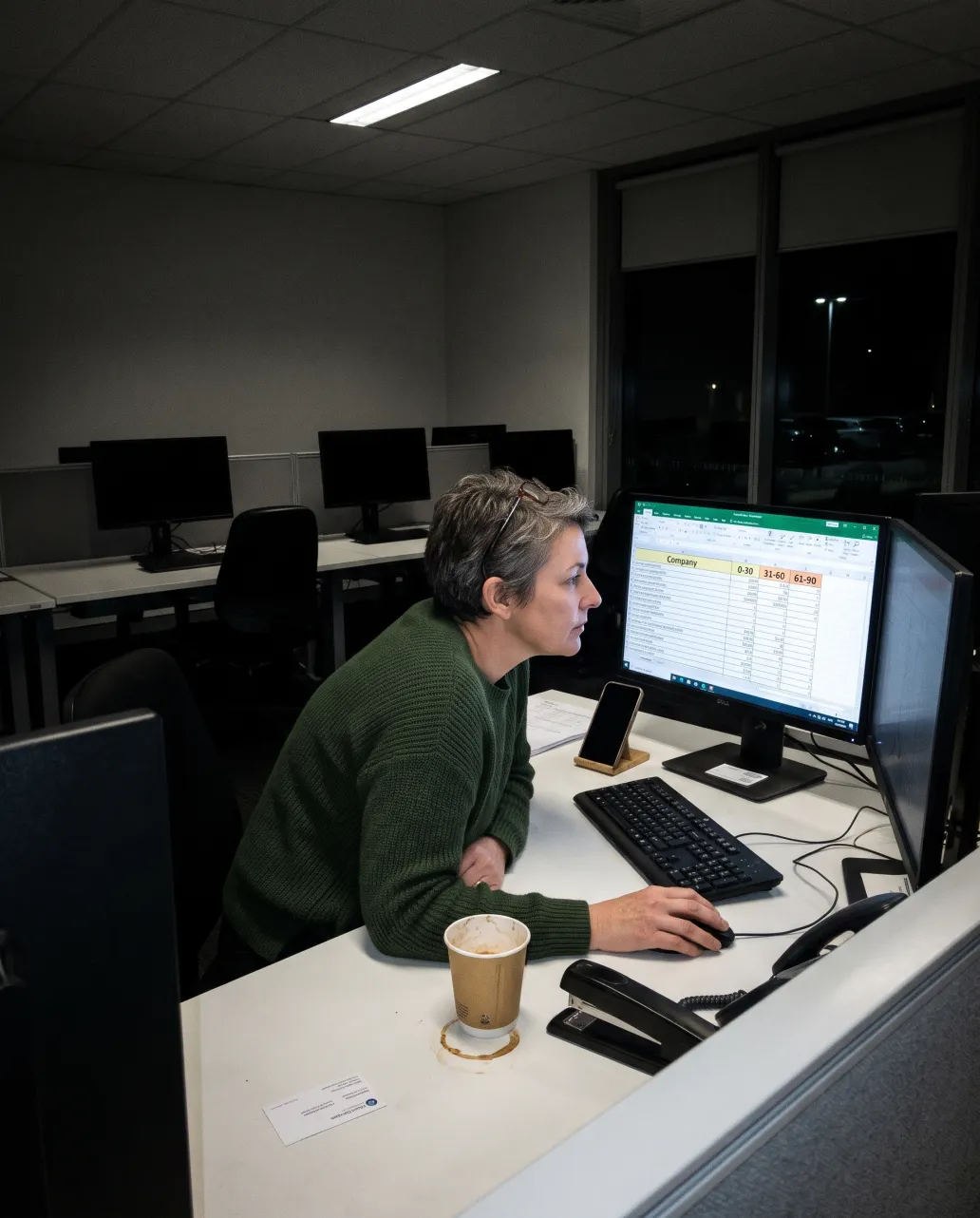
The shot her junior takes across the desk, because she’s been in the same position since six. Who they are
Facts you can source: role, who they answer to, pay, team. Invent the character if it helps, and say so. Age, degree and hobbies change nothing about what they buy.
Controller or finance director at a company of 200 to 2,000 people, in the US or UK. Reports to the CFO. US controller $140K to $210K base, UK controller £85K to £130K. Her AR team is one to three people.
Without you
How they solve it today. That is your real rival. If they have never tried to fix it, the problem is yours, not theirs.
She chases with a spreadsheet and the reminders built into QuickBooks, Xero or NetSuite. This is a default, not a preference. Her team is stretched and the spreadsheet is what is left.
My AR team is 3 people and they are absolutely drowning.
r/ERP · runs finance at a $180M distributor, Mar 2026 Why they buy
The moment that forces a decision. Ask why until the answer surprises you: “saves time” is where the question starts.
The chaser is leaving, or the board is asking why cash is slow, and she needs one number and one owner for disputes.
Why they don’t
Work it as hard as why they buy. A persona with no reason to say no is the customer you wish you had.
She can’t see the emails before they go out, or the tool gives her one more inbox to watch. “AI” sounds like risk.
Who else decides
In B2B one person starts the talk and another signs. Write the one you must move in full, and the rest in a line each.
The champion runs collections and wants to stop being the nag. The CFO signs and wants one number and one person to blame.
The line
“For [name], who [one standing condition].” Pick the condition your brand can act on. It becomes the For line of your positioning statement.
For Make-do Marian, who answers for every email sent in her team’s name.
Who made it
Software designer Alan Cooper made personas popular in his 1999 book The Inmates Are Running the Asylum, as stand-ins for real users. Marketing took them for buyers: Tony Zambito says he coined “buyer persona” in 2001, and Adele Revella built a method on interviews with recent buyers (Buyer Personas, 2015).
Persona, ICP or empathy map
Persona, ICP, Empathy map: three different jobs. An ICP describes the company that buys: size, industry, software. A persona is one person inside it. An empathy map is a workshop canvas for what someone says, thinks, does and feels.
Swap the competitor.
Would a rival selling to the same buyers write the same person? Then you described the segment, not a person.
Three more before you show anyone
Cover the name
Read the name line without the name. If it still says who they are, the name works. If nothing is left, there is no person yet.
Find the no
Is why they don’t buy as worked as why they do? If not, you wrote the customer you wish you had.
Picture the meeting
Do you know what they ask first, what they mutter, and why they say no? If one is a guess, ask why again.
Cross these out.
Name and photo
“Finance Fiona”, stock photo, blazer.“Finance Fiona” is the segment wearing a name tag, and a blazer headshot shows only age, hair and pay band: the facts that sort people and sell nothing. Make-do Marian carries the sentence she’d never say out loud, and the photo puts a stranger in the room where she decides: late, alone, the aging sheet she already trusts, a vendor’s card still sitting there unread.
Demographics
Age 40 to 55, MBA or CPA, married, lives in a suburb.We have no evidence on any of this, and none of it changes what she buys. The only grounded facts are the role, the reporting line and the pay.
Goals
Improve cash flow, reduce DSO, increase efficiency.Close, but too generic. Her real goal is to answer for every email sent in her team’s name, and to have one number for the CFO.
Pain points
Manual processes, late payments, limited resources.The sample shows an AR team “absolutely drowning”. The pain it leaves out is the nag: the awkward conversation nobody has automated.
Motivations
Wants to be a strategic partner to the business.No evidence. We dropped it.
Objections
Cost, integration, change management.The sample says something else. She can’t see what goes out in her team’s name, she doesn’t want one more inbox to watch, and “AI” sounds like risk. Integration did not come up.
Buying triggers
“Growth” or “a new fiscal year”.Two found. The person who chases leaves, or the board asks why cash is slow.
Run it on your brand.
Give Nutcracker your segment and what you know. It reads what buyers write in public, asks why they buy and why they don’t, and gives your team one person to write for. 7 days free, no card.
Already in? Sign in